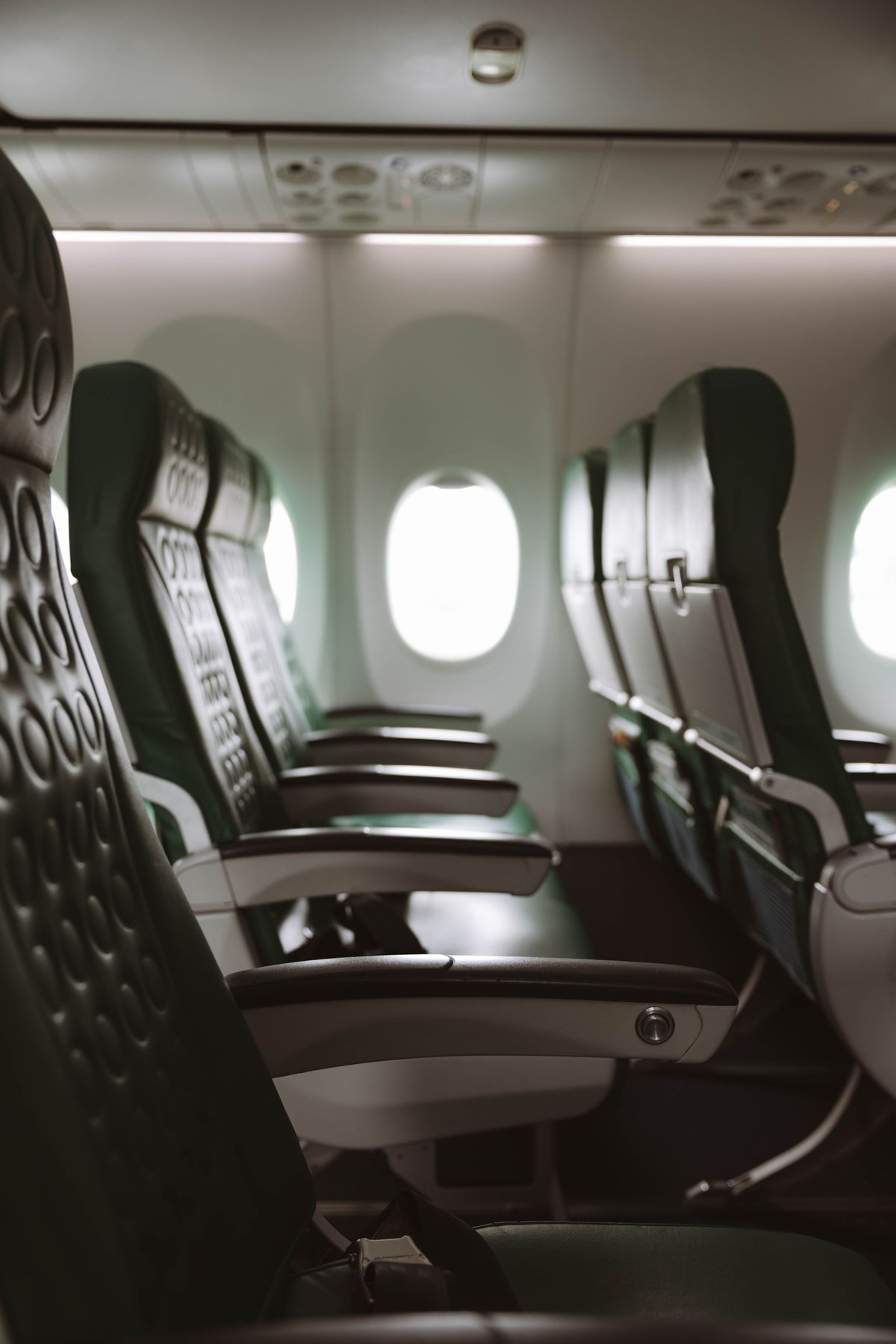
Airlines use "business" and "first" inconsistently across carriers and routes, which is why comparing them is so confusing. On one airline, first class is a separate cabin with suites and caviar. On another, it is a slightly wider seat at the front of the same aircraft.
This guide explains what actually separates business class from first class, how both compare with economy and premium economy, and when paying for either is genuinely worth it.
The short answer
On long-haul international routes, first class is a genuinely different product from business class — more space, more privacy, more service. On most US domestic routes, it is not: "first class" there is closest to an upgraded economy seat, and business class often does not exist as a separate cabin at all.
So the question "is business class or first class worth it?" has no single answer. It depends entirely on the route and the aircraft.
What business class typically includes
- Lie-flat or near-flat seating on long-haul international routes. Domestic business class is usually a larger recliner, not a bed.
- Priority check-in, security, and boarding at most airports.
- A larger checked-baggage allowance than economy — often two bags at a higher weight.
- Airport lounge access on most international business fares, and on some domestic ones.
- Upgraded meal service and proper tableware on long-haul flights, rather than a tray.
What first class adds beyond business
Where first class still exists as a distinct cabin, it typically means:
- More personal space — often a fully enclosed suite with a door.
- Fewer seats and a higher crew-to-passenger ratio, which shows up as faster, more attentive service.
- Higher-end dining and drinks, frequently served on demand rather than to a schedule.
- Greater lounge access, including dedicated first-class lounges at some hubs.
The honest caveat: first class is disappearing. Many carriers have removed it entirely, and several have replaced it with a better business class instead — because business class sells more seats at a price more people will pay.
Domestic vs. international premium cabins
This is the single biggest source of confusion, and it is worth being blunt about it.
Domestic first class on a US carrier is usually a wider recliner seat with more legroom, earlier boarding, free drinks, and a larger bag allowance. It is a better economy seat. It is not a flat bed, and there is usually no separate business class beneath it.
International long-haul business class is a completely different product: a seat that converts to a flat bed, direct aisle access in modern cabins, multi-course dining, and lounge access.
International first class, where offered, sits above that.
Before you pay for any premium cabin, look at the specific aircraft's seat map. The fare class name tells you far less than the seat diagram does.
Business class vs. premium economy vs. economy
Worth understanding, because premium economy is often the better buy:
- Economy: standard seat, standard baggage, no lounge. The baseline.
- Premium economy: wider seat with more recline and legroom, earlier boarding, better food, and a larger bag allowance. Typically priced well below business class.
- Business class: the flat bed, lounge access, and priority service. On long-haul, this is where the meaningful jump happens.
- First class: more space and privacy again, but a smaller step up than the jump from economy to business — and priced accordingly.
The largest quality gain per dollar is usually economy to premium economy on a long flight, or premium economy to business class when the business fare is discounted.
Is business class worth it?
The honest breakdown:
- Worth it more often: long-haul international flights of six hours or more, where a flat bed genuinely changes how you arrive. Red-eye and overnight routes, where the seat is the difference between sleeping and not. Business trips where arriving able to work has a real value.
- Worth it less often: short domestic flights, where the main benefit is a wider seat and priority boarding rather than a fundamentally different experience. Any flight under three hours, where you barely have time to settle in.
A useful test: would you rather have the cash, or arrive rested? On a four-hour daytime flight, most people take the cash.
Independent flight booking assistance service. Not affiliated with any airline. This is a toll-free number, free to call from anywhere in the US.
Finding cheap business class flights
Business class fares vary far more between airlines than economy fares do, which means the gap between the cheapest and most expensive option on the same route can be enormous. A few approaches that genuinely work:
- Compare carriers on the identical route. A discounted business fare on one airline can cost less than full-fare economy on another. This is the single highest-value habit.
- Book the shoulder seasons. Business fares track business travel demand, so late December, January, and mid-summer are often dramatically cheaper on leisure routes.
- Look at connecting itineraries. A one-stop business itinerary is frequently well below the nonstop price, because the nonstop carries the business demand.
- Check the airline's own site as well as search tools. Carriers sometimes discount premium cabins directly rather than through aggregators.
- Consider a mixed itinerary. Business class on the long leg and economy on the short one is often the best value on a two-leg trip.
Ways to fly premium for less
- Award redemptions. Premium cabins usually deliver far better value per mile than economy redemptions. International business class awards are one of the strongest uses of points available.
- Upgrade auctions. Many airlines offer a paid upgrade bid after booking, sometimes at a fraction of the fare difference. It is a genuine option, not a scam — but you are bidding blind on whether it clears.
- Last-minute upgrade offers at check-in. Frequently cheaper than buying the premium fare outright, though availability is unpredictable.
- Upgrade certificates from status. If you hold elite status, confirm how many certificates you have and how far in advance they can be applied — many go unused simply because people forget.
Frequently Asked Questions
What is the real difference between business class and first class?
Where first class exists as a separate cabin, it offers more space, privacy, and service than business class. On many US domestic routes, though, "first class" is closer to an upgraded economy seat than a separate premium product — so the real answer depends on the airline, the aircraft, and the route.
Is business class vs first class a big difference on long-haul flights?
Yes, but smaller than the jump from economy to business. The big quality gain is going from a recliner to a flat bed, which business class already provides on long-haul. First class adds space and privacy on top of that rather than a fundamentally different flight.
Is business class worth it for a short flight?
Less often. The benefits that justify the price — flat-bed seating, extensive lounge access, multi-course dining — matter most on long-haul flights. On a short domestic hop you are mainly paying for a wider seat and earlier boarding.
Does business class always mean a lie-flat seat?
No. Lie-flat seating is standard for long-haul international business class on most major carriers, but domestic and short-haul business or first class seats are usually recliners. Always check the specific aircraft's seat map rather than the fare class name.
What is the cheapest way to fly business class?
Comparing multiple carriers on the same route is the most reliable method, because premium fares vary far more between airlines than economy fares. Booking in a low-demand period — late December, January, or mid-summer on leisure routes — and accepting a one-stop itinerary also help considerably.
Can I use points to book business or first class?
Yes, and premium cabin redemptions usually deliver better value per point than economy ones. International business class awards in particular are among the strongest uses of miles, if you have them.
Is premium economy better value than business class?
Sometimes. Premium economy typically costs far less than business class while removing the worst of economy — more legroom, better recline, earlier boarding. If the business fare is not discounted, premium economy is often the better-value upgrade on a daytime flight.
How do I get a business class upgrade?
Three routes: redeem miles or points for the premium cabin directly, bid in an airline upgrade auction after booking, or accept a last-minute paid upgrade offer at check-in. Elite status upgrade certificates are a fourth if you hold them — check whether yours expire unused.
Deciding whether the upgrade is worth it
Premium cabin pricing varies so much between carriers that the comparison itself is usually the hard part — the same route can differ by thousands of dollars depending on the airline and date. If you want several routes and carriers compared at once, rather than checking them one at a time, a booking agent can run those side by side in a single call.
Independent flight booking assistance service. Not affiliated with any airline. This is a toll-free number, free to call from anywhere in the US. Learn more